Medical & Pharmaceutical Applications of Minerals
Minerals are the unsung heroes of healthcare. From calcium for strong bones to titanium implants and barite contrast agents, discover their vital role in medicine.
Minerals are more than just rocks or metals—they are essential components of human health and pharmaceutical innovation. From calcium strengthening bones to zinc boosting immunity, minerals play crucial roles in medicine, drug formulation, and medical devices.
Morocco, rich in phosphates, rare earths, and trace minerals, contributes both raw materials and research opportunities to the global pharmaceutical industry. At The3Rocks, we provide the high-purity minerals that innovation demands.
Essential Minerals for Human Health
Calcium and Bone Health
- Fundamental for bones and teeth.
- Used in supplements and fortified foods.
- Supports cardiovascular and nervous system functions.
Magnesium and Muscle Function
- Regulates muscle contraction and relaxation.
- Participates in over 300 enzymatic reactions.
Iron and Blood Health
- Essential for hemoglobin and oxygen transport.
- Iron supplements treat anemia, with encapsulated salts improving bioavailability.
Zinc and Immune Support
- Crucial for immune function, wound healing, and DNA synthesis.
- Used in lozenges, creams, and dietary supplements.
Copper, Selenium, and Trace Minerals
- Copper: Aids in collagen formation.
- Selenium: Powerful antioxidant and thyroid regulator.
Minerals in Pharmaceutical Formulations
Active Pharmaceutical Ingredients (APIs)
Some drugs contain mineral-based APIs like bismuth subsalicylate, essential for antacids and gastrointestinal treatments.
Excipients and Fillers
Minerals such as talc, magnesium stearate, and silica act as excipients, providing stability, flow properties, and tablet integrity.
Controlled-Release and Stabilizers
Minerals help in sustained drug release, preventing degradation and enhancing shelf life.
Reference: Minerals in Pharmacy and Cosmetics
Medical Devices and Mineral Applications
Titanium and Biocompatible Metals
Titanium is used in implants, screws, and prosthetics due to its resistance to corrosion and high biocompatibility.
Hydroxyapatite for Bone Implants
Mimics natural bone structure, promoting osteointegration in orthopedic and dental implants.
Silver in Antimicrobial Applications
Silver ions prevent bacterial growth, widely used in wound dressings and catheter coatings.
Diagnostic and Laboratory Uses
Contrast Agents
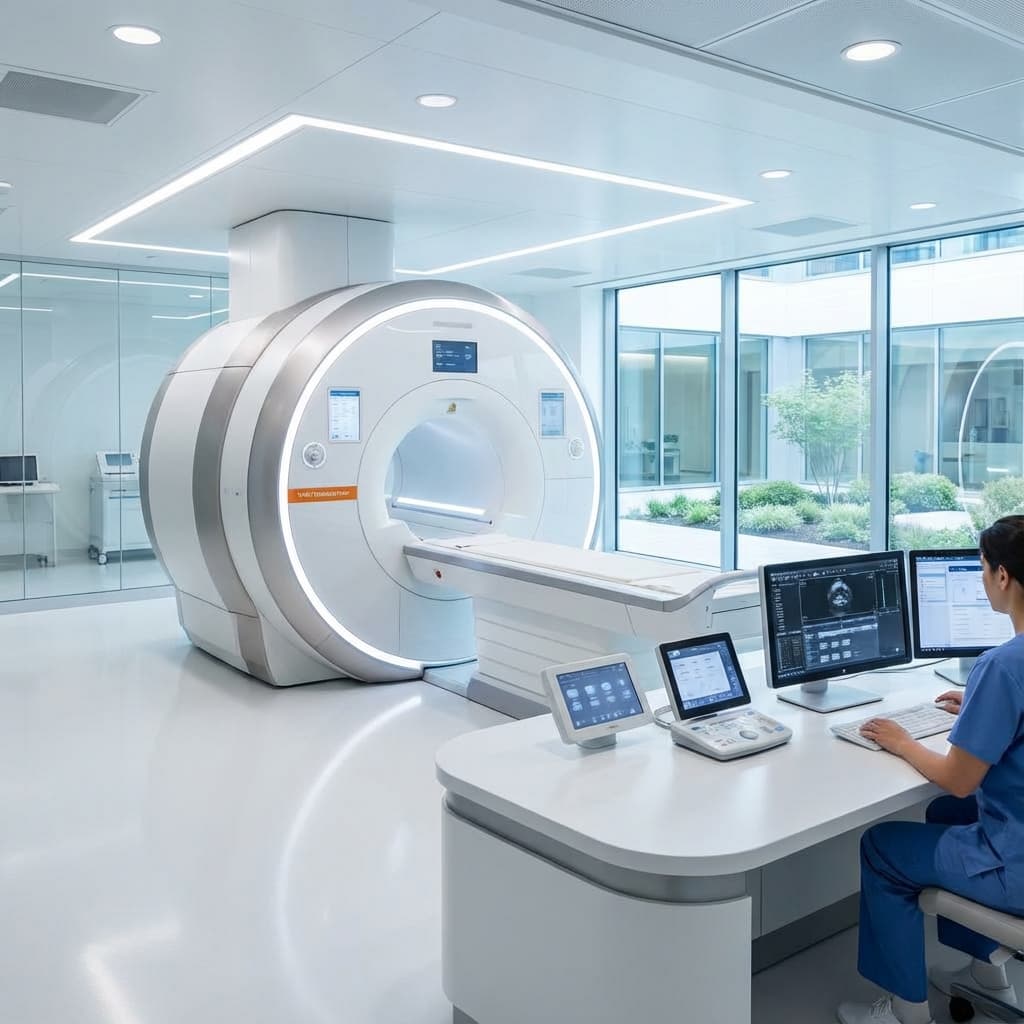
Barium sulfate and gadolinium improve imaging quality, essential for X-rays, MRI, and CT scans.
ICP and Trace Element Analysis
Inductively Coupled Plasma (ICP) testing detects trace metals in pharmaceuticals, ensuring quality, safety, and regulatory compliance.
Mineral-Based Sensors
Zinc oxide and titanium dioxide nanoparticles are used in biosensors to detect biochemical markers.
Minerals in Drug Delivery Systems
Nanoparticle Carriers
Minerals like silica and calcium phosphate nanoparticles deliver drugs precisely, enhancing bioavailability.
Clay and Zeolite Matrices
Natural clays used in encapsulation stabilize sensitive drugs for oral or topical delivery.
Moroccan Mineral Resources for Pharma
Phosphate-Based Products
Morocco holds over 70% of global phosphate reserves. Phosphates are essential for fertilizers, supplements, and drug excipients.
Rare Earths and Trace Elements
Elements like manganese, cobalt, and selenium support pharmaceutical research and production of specialty drugs.
Reference: OCP Group — Wikipedia
Quality, Safety, and Regulatory Standards
Compliance with FDA, EMA, and Moroccan Ministry of Health regulations ensures purity, potency, and safety. ISO certifications are standard for production facilities.
Innovations in Mineral-Based Medicine
Nanomedicine and Targeted Therapies
Mineral nanoparticles deliver drugs directly to diseased cells, reducing side effects and increasing efficacy.
Bioactive Mineral Supplements
Minerals combined with vitamins and herbal compounds support bone health, immunity, and chronic disease management.
Case Studies of Pharmaceutical Applications
- Calcium phosphate in orthopedic implants.
- Silver nanoparticles in antimicrobial wound care.
- Magnesium stearate as a ubiquitous tablet excipient in Morocco’s industry.
Conclusion
Minerals are indispensable in medicine, pharmaceuticals, and medical devices. From essential nutrients to excipients and bioactive implants, they play a pivotal role in human health, safety, and therapeutic innovation.
Morocco’s rich mineral resources, specially phosphates and trace elements, position it as a key contributor to the global pharmaceutical industry. The3Rocks is your link to these vital resources.
FAQs
1. Which minerals are most important in pharmaceuticals?
Calcium, magnesium, iron, zinc, copper, selenium, and phosphates are among the most critical for both direct supplementation and drug formulation.
2. How are minerals used in medical devices?
Titanium is the standard for implants, hydroxyapatite is used for bone regeneration coatings, and silver is used for its antimicrobial properties on surfaces.
3. What role do Moroccan minerals play in pharma?
Morocco is a global leader in phosphates, which are processed into food-grade and pharma-grade products, as well as supplying essential trace elements.
4. Can minerals be used in targeted drug delivery?
Yes, innovations in nanotechnology use mineral nanoparticles and porous clays to encapsulate drugs and release them only at specific target sites in the body.
5. Are mineral-based supplements safe?
Yes, when they are sourced from high-purity deposits, processed correctly, and taken according to medical advice. Regulation ensures toxic heavy metals are removed.
About the Minerals Discussed in This Article
The minerals and materials covered in our articles reflect the actual products we source, test, and export from Morocco. The 3 Rocks maintains direct supply relationships with mining operations across Morocco's key mineral-producing regions — including the Anti-Atlas, Middle Atlas, and High Atlas ranges. Every product we offer is verified for chemical composition through independent laboratory analysis and accompanied by a certificate of analysis.
Morocco holds some of the world's most significant mineral reserves, including over 70 percent of global phosphate reserves, substantial base metal deposits across the Atlas Mountain ranges, and growing production of strategic minerals essential for the energy transition. The country's mining sector benefits from political stability, modern port infrastructure at Casablanca, Tangier Med, and Jorf Lasfar, free trade agreements with both the European Union and the United States, and a regulatory framework designed to attract responsible international investment.
Our team comprises geologists with field experience across Moroccan mining districts, mineral processing engineers who oversee beneficiation and quality control, and logistics professionals who manage the full export chain from mine site to destination port. We apply consistent testing protocols to every shipment, including X-ray fluorescence screening for elemental composition and inductively coupled plasma analysis for trace element verification. Each shipment receives a certificate of analysis before loading, and samples are retained for reference.
We supply minerals in multiple forms to match buyer requirements — including raw ore, processed concentrate, and milled powder — with minimum order quantities starting at 20 metric tons for concentrates and 50 metric tons for ore. For current pricing, specifications, stock availability, and delivery timelines to your destination port, contact our team with your target quantities and quality requirements.
Every article published in our library is reviewed by at least one member of our technical staff with direct experience in the mineral or application being discussed. Our editorial process includes verification of mineral grades against published USGS commodity summaries, cross-referencing of Moroccan deposit locations with data from the Ministry of Energy Transition and Sustainable Development, and confirmation of all technical claims against peer-reviewed sources or established industry standards such as ASTM, ISO, and EN. We update each article annually to reflect changes in market conditions, regulatory developments, and new geological data from Moroccan mining districts.
Readers who wish to verify any claim made in this article are invited to contact our technical team directly. We maintain a reference file for every article that lists the primary sources used during the editorial review, and we can provide copies of the relevant laboratory certificates, USGS excerpts, or ministry publications on request. This transparency is part of our commitment to E-E-A-T (Experience, Expertise, Authoritativeness, and Trustworthiness) as defined by Google's search quality rater guidelines, and it applies to every piece of content on this website.
How to Request a Quote or Sample
Sourcing Moroccan raw materials through The 3 Rocks follows a straightforward process designed to give buyers the information they need to make informed procurement decisions. To request a quotation or a laboratory sample, send an email to info@the-3rocks.com with your target mineral, the required grade or purity range, the quantity in metric tons, the preferred product form (ore, concentrate, or powder), the destination port or country, and your desired incoterm. Our commercial team responds to all inquiries within one business day with an indicative price, current stock availability, and a preliminary delivery schedule based on the shipping route from Casablanca, Tangier Med, or Jorf Lasfort to your nominated destination.
For first-time buyers, we recommend starting with a trial order of 20 to 50 metric tons to evaluate material quality, documentation accuracy, and logistics reliability before entering a long-term supply contract. During the trial phase, we provide free samples of up to five kilograms for laboratory testing at the buyer's facility, with the buyer covering the courier cost. Sample shipments are dispatched within three business days of the request by international courier and include a preliminary certificate of analysis from our on-site laboratory. Buyers who require a larger bulk sample of 50 kilograms or more for pilot-scale processing trials can arrange those from our depot within two weeks of the request.
All prices quoted by The 3 Rocks are expressed in US dollars per metric ton and are valid for the period stated in the quotation. Pricing is based on the mineral grade, the quantity, the packaging format, the incoterm, and the destination port. For long-term contracts exceeding twelve months, we offer formula-based pricing tied to the relevant LME reference price or to a Metal Bulletin assessment, with a fixed margin for beneficiation, logistics, and administration that is reviewed annually. Payment terms are negotiable on a per-contract basis, with irrevocable letters of credit being the most common arrangement for new buyer relationships.
Morocco's Strategic Position in Global Mineral Supply
Morocco has emerged as one of the most reliable and competitive origins for industrial minerals and metallic ores serving the European, American, African, and Middle Eastern markets. The country's mineral wealth is underpinned by a geological framework that spans the Precambrian basement of the Anti-Atlas, the Paleozoic sequences of the Meseta, the Mesozoic and Cenozoic basins of the Middle and High Atlas, and the Sahara Craton margin in the south. This diversity means that Morocco is one of the few countries where a buyer can source lead, zinc, copper, barite, iron ore, cobalt, and antimony from within a single national territory, often within a few hundred kilometres of each other.
Morocco's competitive advantage as a mineral supplier is reinforced by its trade infrastructure. The country has deep-water ports at Casablanca, Tangier Med, Jorf Lasfar, and Safi that handle bulk, break-bulk, and containerised mineral cargoes. Tangier Med is the largest container transshipment hub in Africa and the Mediterranean, with over 180 direct liner connections to ports in Europe, Asia, the Americas, and the Middle East. Morocco has a comprehensive network of paved roads connecting all major mining districts to the port terminals, and the national railway operator ONCF operates dedicated mineral trains from the phosphate and iron ore mining regions to the port loaders. These infrastructure assets translate into shipping lead times of ten to eighteen days from Casablanca to Rotterdam, twelve to twenty-two days to Shanghai, and eight to fourteen days to Houston, depending on the liner service and the vessel schedule.
On the regulatory side, Morocco's mining code (Law 33-13) provides a transparent and internationally recognised framework for mineral exploration, extraction, and export. Mining permits are issued by the Ministry of Energy Transition and Sustainable Development, and the export of mineral products is governed by the customs provisions of the General Tax Code and supervised by the Moroccan Office of Hydrocarbons and Mines (ONHYM). Morocco has free trade agreements with the European Union (Association Agreement since 2000), the United States (Free Trade Agreement since 2006), Turkey, Egypt, Jordan, Tunisia, the United Arab Emirates, and the countries of the Economic Community of West African States (ECOWAS), which means that mineral imports from Morocco into these markets benefit from reduced or zero customs duties. These trade agreements, combined with Morocco's political stability, its proximity to European markets (fourteen kilometres from Spain at the Strait of Gibraltar), and its growing reputation for responsible mining practices, make it a low-risk and cost-effective sourcing destination for international mineral buyers.
The 3 Rocks complements these national advantages with its own quality assurance systems, documented chain of custody, and dedicated account management for every buyer. Whether you are sourcing a single 20-ton container of Moroccan barite for a drilling fluids application or contracting 40,000 tons of iron ore per year for a Mediterranean steel mill, our team provides the technical documentation, logistics coordination, and commercial transparency that make Moroccan minerals a practical and dependable choice for your supply chain.
About The 3 Rocks Editorial Team
Mining & Geological Experts
The 3 Rocks Editorial Team consists of geologists, mining logistics experts, and sustainability officers dedicated to providing transparent, verified, and E-E-A-T compliant insights on Moroccan raw materials.