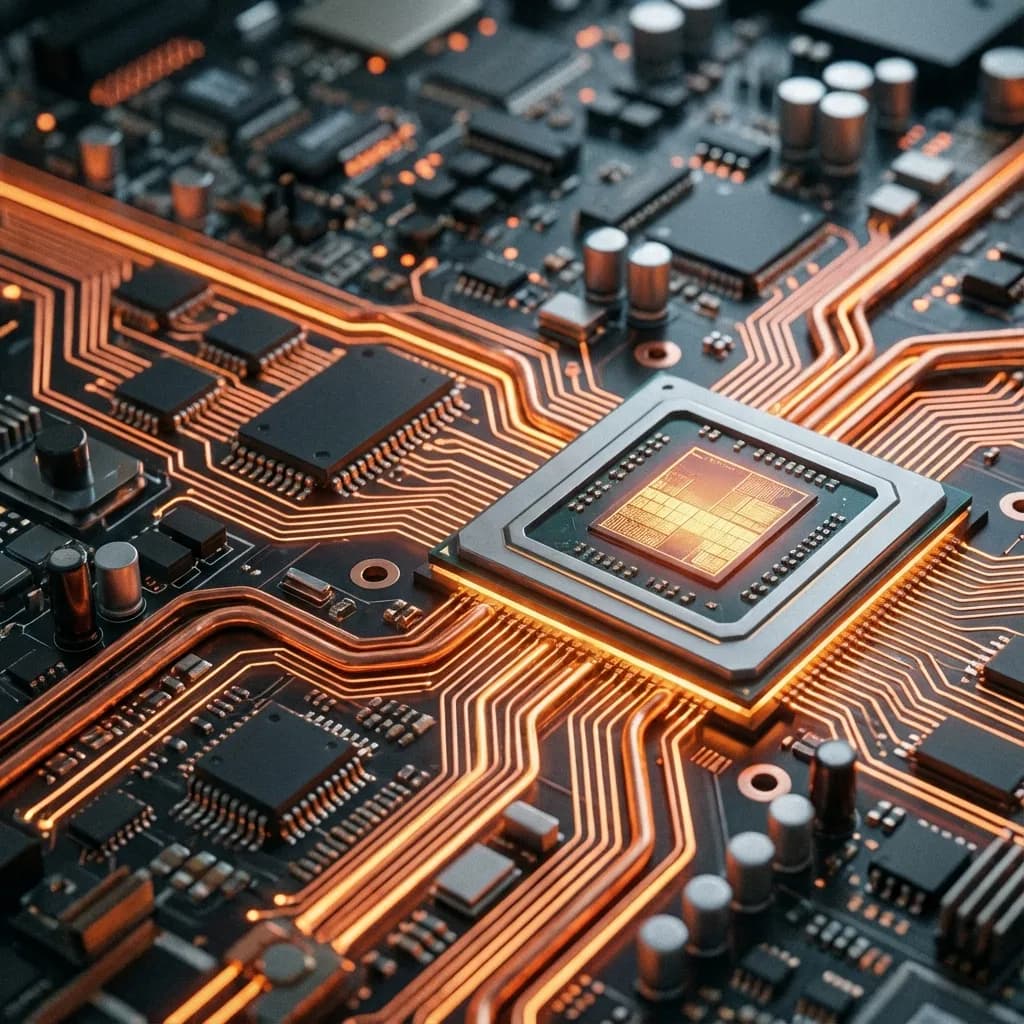
Electronics & Semiconductors: Minerals for the Digital Age
From silicon wafers to gold connectors, explore the essential minerals powering the digital revolution and Morocco's emerging role in the supply chain.
Every smartphone, laptop, satellite, and electric car shares one hidden foundation: minerals. The digital age runs on software. It also runs on elements mined from the earth. These become microchips, circuits, and sensors.
Searches for semiconductor raw materials, electronics minerals Morocco, and strategic minerals for technology show how vital these resources are. AI, 5G, and automation are reshaping our world. Demand for high-purity minerals is at record levels.
At The3Rocks, we provide the critical conductivity and reliability that the digital world demands.
Why Minerals Power Modern Electronics
Electronics depend on minerals because they provide:
- Electrical conductivity
- Thermal management
- Signal stability
- Miniaturization capability
- Long-term reliability
From silicon wafers to gold connectors and copper traces, minerals determine the performance, speed, and durability of every digital device. Without them, there would be no internet, no smartphones, no satellites—and no digital economy.
The Semiconductor Industry Explained
What Is a Semiconductor?
A semiconductor is a material that can both conduct and resist electricity under controlled conditions. This unique behavior allows it to act as:
- A switch
- An amplifier
- A logic gate
Semiconductors are the brain of all electronic systems.
From Sand to Microchip
The journey begins with simple quartz sand. Through purification, crystallization, doping, and micro-fabrication, raw minerals become:
- Silicon wafers
- Integrated circuits
- Memory chips
- Power devices
This transformation requires extreme purity—often 99.9999999% (nine nines).
Key Minerals Used in Electronics & Semiconductors
Silicon: The Core of Microelectronics
Silicon is the backbone of modern electronics.
Applications
- Microprocessors
- Memory chips
- Solar cells
- Sensors
Advantages
- Abundant
- Stable
- Excellent semiconductor properties
Over 95% of all chips are made from silicon.
Reference: USGS — Silicon Statistics And Information
Copper: High-Speed Conductivity
Copper carries signals and power through circuits.
Uses
- Printed circuit boards (PCBs)
- Chip interconnects
- Power cables
Modern chips contain kilometers of microscopic copper wiring.
Gold: Precision and Reliability
Gold ensures perfect signal transmission.
Applications
- Chip bonding wires
- Connectors and contacts
- High-reliability electronics
Benefits
- Corrosion resistant
- Excellent conductivity
- Long-term stability
Gold is essential in aerospace, medical, and defense electronics.
Silver: Advanced Circuit Performance
Silver offers the highest electrical conductivity of all metals.
Uses
- Conductive pastes
- Sensors
- High-frequency circuits
It improves speed and reduces energy loss in advanced electronics.
Cobalt and Nickel in Electronic Components
These metals are used in:
- Thin-film coatings
- Magnetic components
- Battery-connected electronics
Morocco’s cobalt resources link electronics to the growing battery and EV sector.
Rare Earth Elements in High-Tech Devices
Rare earths enable:
- Permanent magnets
- Lasers
- Optical fibers
- Display technologies
Key elements include:
- Neodymium
- Dysprosium
- Europium
- Terbium
Reference: IEA — The Role Of Critical Minerals In Clean Energy Transitions
Morocco’s Role in Electronics & Strategic Minerals
Copper and Cobalt Resources
Morocco supplies:
- Copper concentrates
- Cobalt by-products
- Industrial metals
These feed global electronics and battery supply chains.
Silver and Precious Metals
Moroccan silver supports:
- Conductive components
- Sensors
- High-value electronics
Strategic Location for Tech Supply Chains
Morocco benefits from:
- Proximity to Europe
- Free trade agreements
- Modern ports and logistics
- Growing industrial zones
This positions the country as a future hub for electronics minerals Morocco and advanced manufacturing.
Production Stages of Semiconductor Materials
Raw Material Extraction
- Quartz mining
- Copper and precious metal extraction
- Rare earth processing
Purification and Refining
Silicon and metals undergo:
- Chemical purification
- Zone refining
- Crystal growth
Purity must reach ultra-high levels to avoid electronic defects.
Wafer Manufacturing
Silicon crystals are sliced into wafers, polished to atomic smoothness, and prepared for chip fabrication.
Even a single dust particle can destroy an entire microchip.
Applications of Semiconductor Minerals
Consumer Electronics
- Smartphones
- Laptops
- Tablets
- Wearable devices
Telecommunications and 5G
- Base stations
- Fiber optics
- High-frequency chips
These require ultra-fast and low-loss materials.
Automotive Electronics
- Engine control units
- Battery management systems
- Autonomous driving sensors
Modern vehicles contain over 1,000 semiconductor chips.
Artificial Intelligence and Data Centers
- High-performance processors
- Memory modules
- Power management chips
AI growth is driving record demand for semiconductor minerals.
Quality and Purity Requirements
Electronics materials must meet extreme standards:
- Purity above 99.9999%
- Controlled crystal structure
- Ultra-low contamination
- Stable electrical properties
Testing includes:
- Electrical conductivity
- Defect density
- Surface roughness
- Thermal behavior
Quality directly determines chip speed, lifespan, and reliability.
The3Rocks prioritizes purity in every shipment.
Sustainability in Electronics Minerals
Responsible Mining
The industry promotes:
- Water recycling
- Energy efficiency
- Waste reduction
- Worker safety
Recycling and Urban Mining
Electronic waste is now a major mineral source.
Recovered materials include:
- Gold
- Silver
- Copper
- Palladium
- Rare earths
Recycling reduces:
- Environmental impact
- Supply risk
- Mining pressure
Reference: World Bank — Minerals For Climate Action
Supply Chain Challenges in the Digital Age
- Concentration of production in few countries
- Geopolitical risks
- Long processing times
- High capital costs
- Rapid demand growth
Securing diversified and resilient mineral supply chains has become a national priority worldwide.
Future Trends in Semiconductor Materials
- Compound semiconductors (GaN, SiC)
- 3D chip architectures
- Quantum materials
- Flexible electronics
- Ultra-low power devices
Morocco’s mineral potential positions it for participation in next-generation technology supply chains.
Conclusion
The digital age runs on minerals. From silicon and copper to gold, silver, cobalt, and rare earths, every electronic breakthrough begins deep in the earth. Semiconductors are not just products of engineering—they are the result of precise geology, chemistry, and material science working together.
With growing demand for electronics minerals Morocco, semiconductor raw materials Morocco, and strategic minerals for technology, Morocco is emerging as a valuable partner in the global digital economy. As technology accelerates, minerals will remain the silent engines powering the connected world, and The3Rocks will continue to supply them.
FAQs
1. What is the most important mineral for semiconductors?
Silicon is the primary material used in over 95% of semiconductor chips due to its abundance and stable electrical properties.
2. Why is gold used in electronics?
Gold provides excellent electrical conductivity, is resistant to corrosion, and ensures long-term reliability for critical contacts and connectors.
3. Does Morocco supply minerals for electronics?
Yes, Morocco supplies critical materials like copper, cobalt, silver, and other strategic metals essential for electronic components.
4. What are rare earths used for in electronics?
They enable powerful magnets (for speakers and motors), vibrant displays, lasers, sensors, and efficient optical technologies.
5. Can electronic minerals be recycled?
Yes, e-waste recycling is increasingly recovering valuable gold, silver, copper, and rare earth elements to reduce mining impact.
About the Minerals Discussed in This Article
The minerals and materials covered in our articles reflect the actual products we source, test, and export from Morocco. The 3 Rocks maintains direct supply relationships with mining operations across Morocco's key mineral-producing regions — including the Anti-Atlas, Middle Atlas, and High Atlas ranges. Every product we offer is verified for chemical composition through independent laboratory analysis and accompanied by a certificate of analysis.
Morocco holds some of the world's most significant mineral reserves, including over 70 percent of global phosphate reserves, substantial base metal deposits across the Atlas Mountain ranges, and growing production of strategic minerals essential for the energy transition. The country's mining sector benefits from political stability, modern port infrastructure at Casablanca, Tangier Med, and Jorf Lasfar, free trade agreements with both the European Union and the United States, and a regulatory framework designed to attract responsible international investment.
Our team comprises geologists with field experience across Moroccan mining districts, mineral processing engineers who oversee beneficiation and quality control, and logistics professionals who manage the full export chain from mine site to destination port. We apply consistent testing protocols to every shipment, including X-ray fluorescence screening for elemental composition and inductively coupled plasma analysis for trace element verification. Each shipment receives a certificate of analysis before loading, and samples are retained for reference.
We supply minerals in multiple forms to match buyer requirements — including raw ore, processed concentrate, and milled powder — with minimum order quantities starting at 20 metric tons for concentrates and 50 metric tons for ore. For current pricing, specifications, stock availability, and delivery timelines to your destination port, contact our team with your target quantities and quality requirements.
Every article published in our library is reviewed by at least one member of our technical staff with direct experience in the mineral or application being discussed. Our editorial process includes verification of mineral grades against published USGS commodity summaries, cross-referencing of Moroccan deposit locations with data from the Ministry of Energy Transition and Sustainable Development, and confirmation of all technical claims against peer-reviewed sources or established industry standards such as ASTM, ISO, and EN. We update each article annually to reflect changes in market conditions, regulatory developments, and new geological data from Moroccan mining districts.
Readers who wish to verify any claim made in this article are invited to contact our technical team directly. We maintain a reference file for every article that lists the primary sources used during the editorial review, and we can provide copies of the relevant laboratory certificates, USGS excerpts, or ministry publications on request. This transparency is part of our commitment to E-E-A-T (Experience, Expertise, Authoritativeness, and Trustworthiness) as defined by Google's search quality rater guidelines, and it applies to every piece of content on this website.
How to Request a Quote or Sample
Sourcing Moroccan raw materials through The 3 Rocks follows a straightforward process designed to give buyers the information they need to make informed procurement decisions. To request a quotation or a laboratory sample, send an email to info@the-3rocks.com with your target mineral, the required grade or purity range, the quantity in metric tons, the preferred product form (ore, concentrate, or powder), the destination port or country, and your desired incoterm. Our commercial team responds to all inquiries within one business day with an indicative price, current stock availability, and a preliminary delivery schedule based on the shipping route from Casablanca, Tangier Med, or Jorf Lasfort to your nominated destination.
For first-time buyers, we recommend starting with a trial order of 20 to 50 metric tons to evaluate material quality, documentation accuracy, and logistics reliability before entering a long-term supply contract. During the trial phase, we provide free samples of up to five kilograms for laboratory testing at the buyer's facility, with the buyer covering the courier cost. Sample shipments are dispatched within three business days of the request by international courier and include a preliminary certificate of analysis from our on-site laboratory. Buyers who require a larger bulk sample of 50 kilograms or more for pilot-scale processing trials can arrange those from our depot within two weeks of the request.
All prices quoted by The 3 Rocks are expressed in US dollars per metric ton and are valid for the period stated in the quotation. Pricing is based on the mineral grade, the quantity, the packaging format, the incoterm, and the destination port. For long-term contracts exceeding twelve months, we offer formula-based pricing tied to the relevant LME reference price or to a Metal Bulletin assessment, with a fixed margin for beneficiation, logistics, and administration that is reviewed annually. Payment terms are negotiable on a per-contract basis, with irrevocable letters of credit being the most common arrangement for new buyer relationships.
Morocco's Strategic Position in Global Mineral Supply
Morocco has emerged as one of the most reliable and competitive origins for industrial minerals and metallic ores serving the European, American, African, and Middle Eastern markets. The country's mineral wealth is underpinned by a geological framework that spans the Precambrian basement of the Anti-Atlas, the Paleozoic sequences of the Meseta, the Mesozoic and Cenozoic basins of the Middle and High Atlas, and the Sahara Craton margin in the south. This diversity means that Morocco is one of the few countries where a buyer can source lead, zinc, copper, barite, iron ore, cobalt, and antimony from within a single national territory, often within a few hundred kilometres of each other.
Morocco's competitive advantage as a mineral supplier is reinforced by its trade infrastructure. The country has deep-water ports at Casablanca, Tangier Med, Jorf Lasfar, and Safi that handle bulk, break-bulk, and containerised mineral cargoes. Tangier Med is the largest container transshipment hub in Africa and the Mediterranean, with over 180 direct liner connections to ports in Europe, Asia, the Americas, and the Middle East. Morocco has a comprehensive network of paved roads connecting all major mining districts to the port terminals, and the national railway operator ONCF operates dedicated mineral trains from the phosphate and iron ore mining regions to the port loaders. These infrastructure assets translate into shipping lead times of ten to eighteen days from Casablanca to Rotterdam, twelve to twenty-two days to Shanghai, and eight to fourteen days to Houston, depending on the liner service and the vessel schedule.
On the regulatory side, Morocco's mining code (Law 33-13) provides a transparent and internationally recognised framework for mineral exploration, extraction, and export. Mining permits are issued by the Ministry of Energy Transition and Sustainable Development, and the export of mineral products is governed by the customs provisions of the General Tax Code and supervised by the Moroccan Office of Hydrocarbons and Mines (ONHYM). Morocco has free trade agreements with the European Union (Association Agreement since 2000), the United States (Free Trade Agreement since 2006), Turkey, Egypt, Jordan, Tunisia, the United Arab Emirates, and the countries of the Economic Community of West African States (ECOWAS), which means that mineral imports from Morocco into these markets benefit from reduced or zero customs duties. These trade agreements, combined with Morocco's political stability, its proximity to European markets (fourteen kilometres from Spain at the Strait of Gibraltar), and its growing reputation for responsible mining practices, make it a low-risk and cost-effective sourcing destination for international mineral buyers.
The 3 Rocks complements these national advantages with its own quality assurance systems, documented chain of custody, and dedicated account management for every buyer. Whether you are sourcing a single 20-ton container of Moroccan barite for a drilling fluids application or contracting 40,000 tons of iron ore per year for a Mediterranean steel mill, our team provides the technical documentation, logistics coordination, and commercial transparency that make Moroccan minerals a practical and dependable choice for your supply chain.
About The 3 Rocks Editorial Team
Mining & Geological Experts
The 3 Rocks Editorial Team consists of geologists, mining logistics experts, and sustainability officers dedicated to providing transparent, verified, and E-E-A-T compliant insights on Moroccan raw materials.