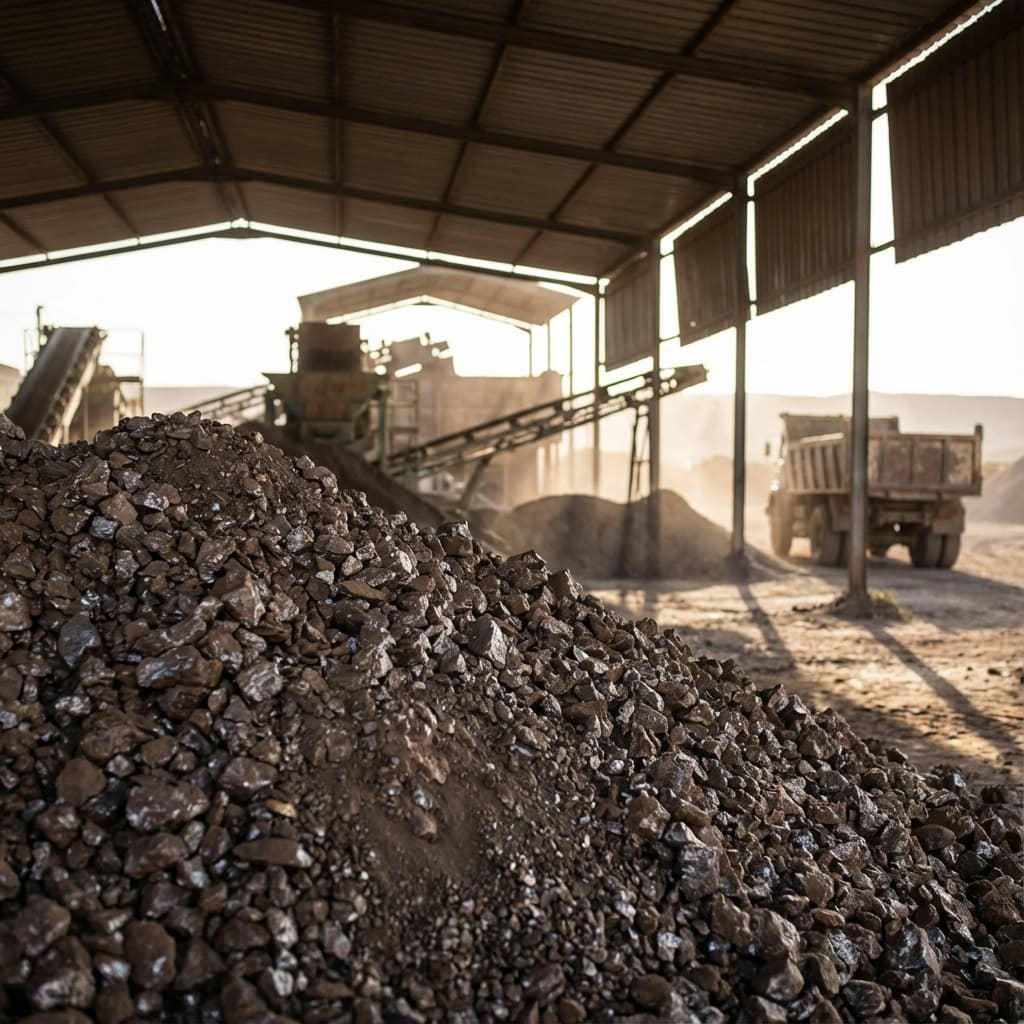
Environmental Impact Assessments (EIA) in Mining
Understand the rigorous scientific process of Environmental Impact Assessments (EIA) that ensures mining projects protect both nature and communities.
Mining fuels modern civilization. From the copper in our electronics to the cobalt in batteries and the iron in our infrastructure, minerals are everywhere. But extracting these resources comes with serious environmental responsibilities. That is where Environmental Impact Assessments (EIA) step in.
Search terms such as EIA in mining, environmental assessment mining projects, and sustainable mining regulations highlight how critical EIAs have become. They are not just paperwork—they are the foundation of responsible, sustainable mining in the 21st century.
At The3Rocks, we only partner with operations that uphold strict environmental standards.
Why EIAs Are Essential in the Mining Industry
Mining projects can affect landscapes, water systems, air quality, ecosystems, and communities. Without proper assessment, the consequences can be long-lasting and sometimes irreversible.
EIAs help to:
- Identify environmental risks before mining begins
- Protect water, soil, and biodiversity
- Prevent costly environmental damage
- Improve project design and efficiency
- Build trust with governments and communities
- Ensure legal compliance
In short, EIAs turn mining from a purely technical activity into a responsible environmental process.
Legal and Regulatory Framework for EIAs
International Environmental Standards
Globally, mining EIAs follow international principles and guidelines such as:
- World Bank Environmental and Social Framework
- International Finance Corporation (IFC) Performance Standards
- United Nations Environment Programme (UNEP) guidelines
These standards ensure environmental protection, social safeguards, and transparent decision-making.
Reference: IFC Performance Standards
National Mining and Environmental Laws
Most countries require EIAs before granting:
- Exploration licenses
- Mining permits
- Expansion approvals
- Tailings and waste facilities
Environmental authorities review EIA reports and impose conditions to protect ecosystems and communities.
Key Environmental Risks in Mining Projects
Land Disturbance and Biodiversity Loss
Mining often involves:
- Clearing vegetation
- Excavating large areas
- Building access roads
These activities can destroy habitats and fragment ecosystems if not properly managed.
Water Pollution and Acid Mine Drainage
Water is one of the most sensitive issues in mining.
Risks include:
- Heavy metal contamination
- Acid mine drainage
- Sedimentation of rivers
- Groundwater depletion
Poor water management can affect agriculture, drinking water, and aquatic life for decades.
Air Emissions and Dust Control
Mining generates:
- Dust particles
- Diesel emissions
- Sulfur and nitrogen oxides
These affect worker health, nearby communities, and climate change.
Noise and Vibration Impacts
Blasting, drilling, and hauling create:
- Noise pollution
- Ground vibrations
- Disturbance to wildlife and residents
EIAs evaluate these impacts and propose control measures.
Main Stages of an Environmental Impact Assessment
Screening and Scoping
This first stage determines:
- Whether an EIA is required
- Which environmental issues must be studied
- The geographic and technical scope of the assessment
It defines the roadmap of the entire EIA process.
Baseline Environmental Studies
Experts collect data on:
- Climate and meteorology
- Water quality and hydrology
- Soil and geology
- Flora and fauna
- Socio-economic conditions
These baseline conditions become the reference point for future monitoring.
Impact Prediction and Evaluation
Specialists analyze how mining activities will affect:
- Land stability
- Water systems
- Air quality
- Biodiversity
- Human health
Models and field studies predict short-term and long-term impacts.
Mitigation Measures and Environmental Management Plans
For every identified risk, the EIA proposes solutions such as:
- Waste containment systems
- Water treatment plants
- Dust suppression methods
- Progressive land rehabilitation
- Biodiversity offset programs
These measures are documented in an Environmental Management Plan (EMP).
Public Consultation and Stakeholder Engagement
Community Participation
Modern EIAs require:
- Public meetings
- Information disclosure
- Feedback collection
- Transparent communication
Local communities often provide valuable knowledge about environmental and social conditions.
Indigenous and Local Rights
In many regions, mining projects must respect:
- Land rights
- Cultural heritage
- Traditional livelihoods
Free, prior, and informed consent (FPIC) is increasingly required.
EIA Documentation and Reporting
The final EIA report typically includes:
- Project description
- Baseline studies
- Impact analysis
- Mitigation measures
- Monitoring programs
- Emergency response plans
Regulators review the report before approving, rejecting, or conditioning the mining permit.
Monitoring, Auditing, and Compliance
Approval is not the end of the process.
Mining companies must:
- Monitor air, water, and soil quality
- Report regularly to authorities
- Conduct environmental audits
- Adjust operations if impacts exceed limits
Continuous monitoring ensures long-term environmental protection.
Role of EIAs in Sustainable Mining
Environmental Protection
EIAs reduce:
- Habitat destruction
- Water contamination
- Air pollution
- Waste mismanagement
They protect ecosystems for future generations.
Social Responsibility
By engaging communities, EIAs:
- Reduce conflicts
- Improve transparency
- Protect livelihoods
- Strengthen social acceptance
A socially accepted mine is more stable and productive.
Long-Term Mine Closure Planning
EIAs now require:
- Rehabilitation plans
- Financial guarantees
- Post-closure monitoring
- Land reuse strategies
Mine closure is treated as part of the project from day one.
Challenges in Mining EIAs
- Incomplete baseline data
- Complex geological conditions
- Climate change uncertainty
- Community opposition
- Long approval timelines
- High technical and financial costs
Balancing development with environmental protection remains a constant challenge.
Best Practices for Effective EIAs
Successful EIAs follow these principles:
- Early stakeholder engagement
- Independent expert studies
- Transparent reporting
- Adaptive management
- Integration with mine planning
- Strong regulatory oversight
Good EIAs reduce risks, delays, and reputational damage.
Future Trends in Environmental Assessment
- Digital environmental monitoring
- Satellite and drone surveys
- Real-time water quality sensors
- Climate risk integration
- Biodiversity net-gain policies
- Stronger ESG reporting requirements
Environmental assessments are becoming smarter, faster, and more transparent.
Reference: UNEP — Environmental Law and Governance
Conclusion
Environmental Impact Assessments are no longer optional—they are the backbone of responsible mining. By identifying risks, protecting ecosystems, involving communities, and guiding sustainable operations, EIAs ensure that mineral development benefits society without sacrificing the environment.
As global demand for minerals grows, the importance of EIA in mining, environmental assessment mining projects, and sustainable mining practices will only increase. The future of mining depends not just on what we extract—but on how wisely and responsibly we do it. The3Rocks is committed to leading this way.
FAQs
1. What is an Environmental Impact Assessment in mining?
It is a formal scientific study that evaluates the potential environmental and social effects of a mining project before it begins, predicting risks and planning mitigation.
2. Is an EIA mandatory for mining projects?
Yes, in most countries, including Morocco, rigorous EIAs are legally required and must be approved by environmental authorities before any mining permit is granted.
3. What are the main risks evaluated in a mining EIA?
Key risks include land disturbance, water pollution, air emissions (dust), biodiversity loss, noise, and social impacts on local communities.
4. Who prepares an EIA?
Independent, certified environmental consultants and scientists prepare the EIA. They work alongside mining companies but must remain objective for regulatory review.
5. What happens after EIA approval?
The project proceeds under strict conditions. It is continuously monitored and audited to ensure it complies with the Environmental Management Plan (EMP).
About the Minerals Discussed in This Article
The minerals and materials covered in our articles reflect the actual products we source, test, and export from Morocco. The 3 Rocks maintains direct supply relationships with mining operations across Morocco's key mineral-producing regions — including the Anti-Atlas, Middle Atlas, and High Atlas ranges. Every product we offer is verified for chemical composition through independent laboratory analysis and accompanied by a certificate of analysis.
Morocco holds some of the world's most significant mineral reserves, including over 70 percent of global phosphate reserves, substantial base metal deposits across the Atlas Mountain ranges, and growing production of strategic minerals essential for the energy transition. The country's mining sector benefits from political stability, modern port infrastructure at Casablanca, Tangier Med, and Jorf Lasfar, free trade agreements with both the European Union and the United States, and a regulatory framework designed to attract responsible international investment.
Our team comprises geologists with field experience across Moroccan mining districts, mineral processing engineers who oversee beneficiation and quality control, and logistics professionals who manage the full export chain from mine site to destination port. We apply consistent testing protocols to every shipment, including X-ray fluorescence screening for elemental composition and inductively coupled plasma analysis for trace element verification. Each shipment receives a certificate of analysis before loading, and samples are retained for reference.
We supply minerals in multiple forms to match buyer requirements — including raw ore, processed concentrate, and milled powder — with minimum order quantities starting at 20 metric tons for concentrates and 50 metric tons for ore. For current pricing, specifications, stock availability, and delivery timelines to your destination port, contact our team with your target quantities and quality requirements.
Every article published in our library is reviewed by at least one member of our technical staff with direct experience in the mineral or application being discussed. Our editorial process includes verification of mineral grades against published USGS commodity summaries, cross-referencing of Moroccan deposit locations with data from the Ministry of Energy Transition and Sustainable Development, and confirmation of all technical claims against peer-reviewed sources or established industry standards such as ASTM, ISO, and EN. We update each article annually to reflect changes in market conditions, regulatory developments, and new geological data from Moroccan mining districts.
Readers who wish to verify any claim made in this article are invited to contact our technical team directly. We maintain a reference file for every article that lists the primary sources used during the editorial review, and we can provide copies of the relevant laboratory certificates, USGS excerpts, or ministry publications on request. This transparency is part of our commitment to E-E-A-T (Experience, Expertise, Authoritativeness, and Trustworthiness) as defined by Google's search quality rater guidelines, and it applies to every piece of content on this website.
How to Request a Quote or Sample
Sourcing Moroccan raw materials through The 3 Rocks follows a straightforward process designed to give buyers the information they need to make informed procurement decisions. To request a quotation or a laboratory sample, send an email to info@the-3rocks.com with your target mineral, the required grade or purity range, the quantity in metric tons, the preferred product form (ore, concentrate, or powder), the destination port or country, and your desired incoterm. Our commercial team responds to all inquiries within one business day with an indicative price, current stock availability, and a preliminary delivery schedule based on the shipping route from Casablanca, Tangier Med, or Jorf Lasfort to your nominated destination.
For first-time buyers, we recommend starting with a trial order of 20 to 50 metric tons to evaluate material quality, documentation accuracy, and logistics reliability before entering a long-term supply contract. During the trial phase, we provide free samples of up to five kilograms for laboratory testing at the buyer's facility, with the buyer covering the courier cost. Sample shipments are dispatched within three business days of the request by international courier and include a preliminary certificate of analysis from our on-site laboratory. Buyers who require a larger bulk sample of 50 kilograms or more for pilot-scale processing trials can arrange those from our depot within two weeks of the request.
All prices quoted by The 3 Rocks are expressed in US dollars per metric ton and are valid for the period stated in the quotation. Pricing is based on the mineral grade, the quantity, the packaging format, the incoterm, and the destination port. For long-term contracts exceeding twelve months, we offer formula-based pricing tied to the relevant LME reference price or to a Metal Bulletin assessment, with a fixed margin for beneficiation, logistics, and administration that is reviewed annually. Payment terms are negotiable on a per-contract basis, with irrevocable letters of credit being the most common arrangement for new buyer relationships.
Morocco's Strategic Position in Global Mineral Supply
Morocco has emerged as one of the most reliable and competitive origins for industrial minerals and metallic ores serving the European, American, African, and Middle Eastern markets. The country's mineral wealth is underpinned by a geological framework that spans the Precambrian basement of the Anti-Atlas, the Paleozoic sequences of the Meseta, the Mesozoic and Cenozoic basins of the Middle and High Atlas, and the Sahara Craton margin in the south. This diversity means that Morocco is one of the few countries where a buyer can source lead, zinc, copper, barite, iron ore, cobalt, and antimony from within a single national territory, often within a few hundred kilometres of each other.
Morocco's competitive advantage as a mineral supplier is reinforced by its trade infrastructure. The country has deep-water ports at Casablanca, Tangier Med, Jorf Lasfar, and Safi that handle bulk, break-bulk, and containerised mineral cargoes. Tangier Med is the largest container transshipment hub in Africa and the Mediterranean, with over 180 direct liner connections to ports in Europe, Asia, the Americas, and the Middle East. Morocco has a comprehensive network of paved roads connecting all major mining districts to the port terminals, and the national railway operator ONCF operates dedicated mineral trains from the phosphate and iron ore mining regions to the port loaders. These infrastructure assets translate into shipping lead times of ten to eighteen days from Casablanca to Rotterdam, twelve to twenty-two days to Shanghai, and eight to fourteen days to Houston, depending on the liner service and the vessel schedule.
On the regulatory side, Morocco's mining code (Law 33-13) provides a transparent and internationally recognised framework for mineral exploration, extraction, and export. Mining permits are issued by the Ministry of Energy Transition and Sustainable Development, and the export of mineral products is governed by the customs provisions of the General Tax Code and supervised by the Moroccan Office of Hydrocarbons and Mines (ONHYM). Morocco has free trade agreements with the European Union (Association Agreement since 2000), the United States (Free Trade Agreement since 2006), Turkey, Egypt, Jordan, Tunisia, the United Arab Emirates, and the countries of the Economic Community of West African States (ECOWAS), which means that mineral imports from Morocco into these markets benefit from reduced or zero customs duties. These trade agreements, combined with Morocco's political stability, its proximity to European markets (fourteen kilometres from Spain at the Strait of Gibraltar), and its growing reputation for responsible mining practices, make it a low-risk and cost-effective sourcing destination for international mineral buyers.
The 3 Rocks complements these national advantages with its own quality assurance systems, documented chain of custody, and dedicated account management for every buyer. Whether you are sourcing a single 20-ton container of Moroccan barite for a drilling fluids application or contracting 40,000 tons of iron ore per year for a Mediterranean steel mill, our team provides the technical documentation, logistics coordination, and commercial transparency that make Moroccan minerals a practical and dependable choice for your supply chain.
About The 3 Rocks Editorial Team
Mining & Geological Experts
The 3 Rocks Editorial Team consists of geologists, mining logistics experts, and sustainability officers dedicated to providing transparent, verified, and E-E-A-T compliant insights on Moroccan raw materials.