Moroccan Lead Concentrate & Ore — FOB Export from Casablanca
Buy Moroccan lead concentrate (86% Pb), powder, and run-of-mine ore. ISO-certified labs. Ships FOB Casablanca or Tangier Med. 20-ton minimum. Quote in 24 hrs.
Morocco is one of the world's most significant mineral producers, with deposits that have been worked for centuries. Our Lead is sourced from carefully selected Moroccan mining regions known for their exceptional geological characteristics. Each shipment reflects the unique mineral composition of these deposits, processed under strict quality controls to meet international specifications for global buyers.
We offer Lead in multiple grades and forms — including ore, concentrate, and processed material — to match your exact production requirements. Every lot is tested for chemical composition, particle size, moisture content, and contaminants before shipment. Our logistics team manages all documentation, port handling, and shipping from major Moroccan ports to destinations worldwide.
Moroccan lead ore is sourced primarily from the Bni Taddjit and Errachidia mineral belt in the eastern High Atlas, where vein and replacement-style deposits have been worked for centuries and remain among the most consistently high-grade lead sources in North Africa. The ore is concentrated at our partner facilities to a typical 86 percent lead grade for the concentrate stream, with a 76 percent grade for the powder form and a 50 percent-plus grade for run-of-mine ore, each matched to the requirements of downstream processors. Our lead concentrate is packed and shipped in 1.5-tonne big bags or 50-kilogram bags, loaded in twenty-foot containers at the Casablanca container terminal or as break-bulk cargo at Jorf Lasfar port. The powder form is supplied in sealed 25-kilogram multi-ply paper sacks with a PE liner and palletised for container stuffing. Moroccan lead concentrate is widely used by lead-acid battery manufacturers in Europe, Africa, and Asia — the battery sector alone accounts for more than eighty percent of global lead consumption. The powder form is preferred by radiation shielding producers, cosmetics formulators, and specialty alloy makers; the run-of-mine ore is exported to smelters that operate their own milling circuits. Every shipment is accompanied by an independent laboratory certificate covering lead, silver, zinc, copper, and antimony content, with X-ray fluorescence screening and ICP confirmation of the full assay suite. Our depot in Errachidia maintains standing stock of concentrate, powder, and ore throughout the year, and we coordinate monthly trucking to Casablanca and Jorf Lasfar on a published schedule that allows buyers to plan their logistics with confidence. For new buyers, we recommend beginning with a trial lot of twenty to fifty metric tons to evaluate the grade consistency and the responsiveness of our documentation and logistics team before committing to a long-term supply contract.
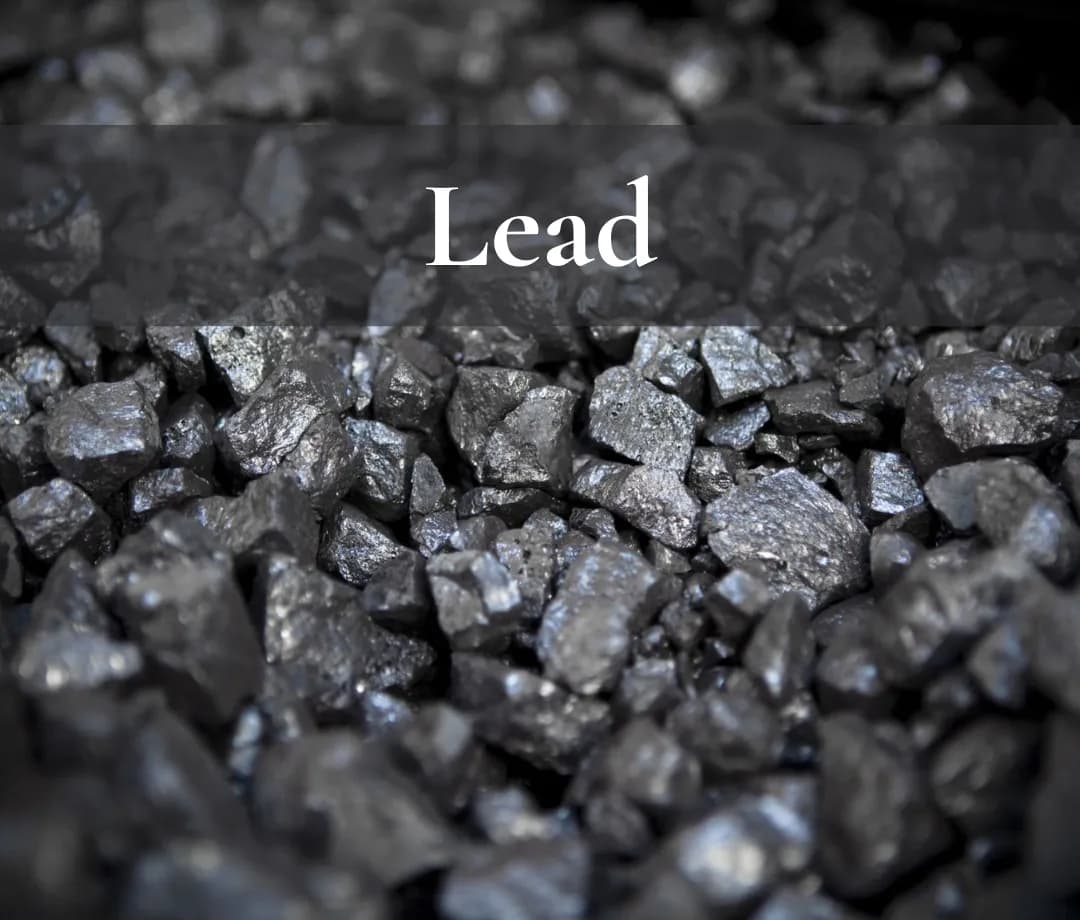
Specifications
Our Moroccan lead is sourced from Morocco's most productive mining regions, ensuring exceptional quality and purity. Each batch undergoes rigorous quality control testing to meet international industry standards and customer specifications.
Available Stock
Frequently Asked Questions About Moroccan Lead
Everything you need to know about our lead extraction, sourcing, and applications.
Where is the lead mined in Morocco?
How much lead is extracted annually?
What applications is Moroccan lead used for?
Applications
Quality Assurance
Our Moroccan lead meets the highest industry standards with strict quality control processes throughout extraction and processing at our Morocco-based facilities.
Sourcing & Global Logistics
Every shipment of Moroccan lead begins at carefully evaluated deposits in Morocco's mineral-rich regions. Our sourcing team works directly with mine operators to select material that meets your target specifications, from ore grade and concentrate purity to particle size and moisture content. We then coordinate all downstream logistics — including quality verification at independent laboratories, export documentation, port handling, and container loading — to deliver your material efficiently from Moroccan ports to your destination.
Our quality control process begins at the mine site, where our field geologists assess mineral grade, consistency, and physical characteristics before extraction. Material then moves to partner beneficiation facilities where it undergoes crushing, grinding, washing, and concentration as needed to meet export specifications. At each stage, samples are collected and analyzed using XRF for rapid elemental screening and ICP-OES for precise trace element quantification. Every shipment is tested for moisture content, particle size distribution, and chemical composition before a certificate of analysis is issued.
For export logistics, our team manages the complete documentation chain — including certificates of origin issued by the Moroccan Chamber of Commerce, bills of lading, packing lists, commercial invoices, weight certificates from certified scales at the port terminal, and phytosanitary or radioactive clearance certificates when required. We also arrange independent third-party inspection at the port of loading when specified by the buyer, with surveyors from SGS, Bureau Veritas, or Intertek available for pre-shipment verification.
We ship from three principal Moroccan ports. Casablanca port handles containerized minerals and break-bulk shipments with direct liner services to Northern Europe, West Africa, and the Americas. Tangier Med is Morocco's largest container transshipment hub with connections to over 180 ports worldwide, offering frequent sailings to Asia and the Mediterranean. Jorf Lasfar specializes in bulk mineral exports with dedicated loading facilities for phosphate-based products and industrial minerals. For specialized requirements, we can also arrange rail transport from mining regions directly to port terminals, reducing handling and ensuring material integrity throughout the logistics chain.
Industrial Applications & Market Sectors
Moroccan lead serves a diverse range of industrial sectors, each with specific quality requirements, certification standards, and logistics preferences. The principal markets for this material include Construction materials, Automotive industry, Electronics and energy storage, and Cosmetics manufacturing. Buyers in each sector typically require different grades, packaging formats, and documentation, and our team works closely with each buyer to match the product specification to the intended end use.
For customers in the Construction materials sector, we supply lead in grades that meet the relevant international standards, supported by a full certificate of analysis and, where required, a statement of conformity with REACH, RoHS, or other applicable regulations. Our sales team can provide technical data sheets, safety data sheets, and application-specific recommendations based on the buyer's production process and quality thresholds.
In the Automotive industry field, lead from Moroccan deposits is valued for its consistent purity profile, low impurity content, and availability in multiple physical forms. Buyers in this segment typically require smaller volumes but higher documentation standards, including full traceability from mine to loading point. We accommodate these requirements by maintaining separate production batches with dedicated stock management and segregated container loading.
The Electronics and energy storage market for Moroccan lead has grown steadily as international buyers seek to diversify their supply sources. Morocco's geographic position at the crossroads of Europe, Africa, and the Middle East, combined with its modern port infrastructure at Casablanca and Tangier Med, makes it a competitive origin for mineral shipments to most major industrial regions. Our logistics team manages the complete export chain, from inland trucking and port handling to ocean freight and customs clearance at destination, under FOB, CFR, CIF, or DDP incoterms as agreed with the buyer.
New buyers are encouraged to begin with a trial shipment of 20 to 50 metric tons to evaluate the material quality, documentation accuracy, and logistics reliability before entering a long-term supply agreement. During the trial phase, we provide weekly updates on stock availability, production scheduling, and vessel booking, and we assign a dedicated account manager who serves as the single point of contact for all commercial and operational matters.
Mining & Processing Overview
The extraction of Moroccan lead takes place in geological formations that are characteristic of the Atlas Mountain belt, where tectonic activity has created mineral-rich zones with deposits that range from near-surface oxide zones suitable for open-pit extraction to deeper sulphide ore bodies accessed through underground mining. The specific mining method applied to each deposit depends on the depth, geometry, and grade distribution of the mineralised zone, as well as on the surrounding rock competence and the hydrological conditions of the area.
After extraction, the ore is transported to a beneficiation facility where it undergoes a sequence of physical and chemical processes designed to separate the valuable mineral from the waste rock and to upgrade the mineral content to the target export grade. For lead, the beneficiation flowsheet typically includes crushing and grinding to liberate the mineral particles, followed by gravity separation, flotation, magnetic separation, or a combination of these methods, depending on the mineralogy of the deposit and the required product specification. The final concentrate or direct-shipping ore is then dried, sampled, and stored under cover awaiting dispatch.
Quality control is integrated into every stage of the mining and processing sequence. Field geologists map and sample each mining face before blasting to confirm grade continuity. The beneficiation plant operator monitors feed grade hourly and adjusts process parameters to maintain output within specification. Each production batch is assigned a unique lot number, and samples are collected at the plant and again at the port for independent laboratory analysis. The certified results are recorded against the lot number and made available to the buyer as part of the shipment documentation package.
Our monthly production capacity for Moroccan lead is maintained through a network of partner mines and contract processing facilities, allowing us to scale volumes up or down in response to buyer demand. We hold standing stock at our regional depots and at the port terminals, with typical availability of 400 tons at any given time. For long-term contracts exceeding 12 months, we work with our mining partners to reserve dedicated production capacity and to establish a quality baseline that remains consistent throughout the contract period.
Quality Standards & Export Compliance
Every export shipment of Moroccan lead from The 3 Rocks is processed in accordance with Moroccan export regulations, international trade standards, and the specific quality requirements of the destination country. Our quality management system covers mineral grade verification, contaminant screening, moisture determination, particle size analysis, and physical property testing as applicable to each mineral type. Test methods are selected from international standards including ASTM, ISO, and EN where they exist for the specific mineral and parameter being measured.
For buyers in regulated industries — including aerospace, defence, pharmaceuticals, cosmetics, and food-contact applications — we can arrange for additional testing and certification beyond the standard certificate of analysis. This includes heavy metal screening by ICP-MS, mineral phase identification by X-ray diffraction, specific surface area measurement by BET analysis, thermal stability testing by thermogravimetric analysis, and microbiological testing for cosmetic-grade minerals. These additional tests are performed by accredited partner laboratories and the results are incorporated into the shipment documentation package.
Export documentation from The 3 Rocks includes the certificate of origin issued by the Moroccan Chamber of Commerce, the commercial invoice, the packing list, the bill of lading or air waybill, the certificate of analysis from a Moroccan ISO 17025-accredited laboratory, and any destination-specific certifications such as the European Union REACH compliance statement or the United States TSCA certification. For shipments to countries that require a phytosanitary certificate or a radioactive clearance certificate, we coordinate the inspection and certification through the relevant Moroccan authorities before loading.
We maintain records of all quality control data, shipment documentation, and correspondence for each transaction for a minimum of five years, and we make these records available to the buyer or to the buyer's nominated representative upon request. For contracts that specify a penalty for off-grade material, the reference analysis method and the arbitration procedure are defined in the contract terms before shipment, and both parties agree on a mutually acceptable referee laboratory before loading commences.
Export Markets & Shipping Guide
Moroccan lead from The 3 Rocks is exported to buyers across Europe, Asia, the Middle East, Africa, and the Americas. Our primary export markets for this mineral include industrial processors and manufacturers in Spain, Italy, Germany, France, Belgium, the Netherlands, the United Kingdom, Turkey, Egypt, Saudi Arabia, the United Arab Emirates, India, China, Japan, South Korea, Nigeria, Ghana, the United States, and Brazil. For each destination, we tailor the shipping method, documentation, and packaging to the buyer's specific requirements and to the regulations of the destination country.
Standard shipping is arranged in 20-foot or 40-foot containers from Casablanca or Tangier Med, with vessel nomination and container booking managed by our logistics team. For large-volume orders exceeding 500 metric tons, we can arrange break-bulk or full-vessel charter shipments from Jorf Lasfar or Casablanca, with the vessel type and size matched to the buyer's discharge port capabilities. Our team manages all port-side logistics including container stuffing, weight verification at certified scales, customs clearance through Morocco's ADIL system, and vessel-side documentation including the bill of lading, cargo manifest, and stowage plan.
Shipping insurance is arranged through a Moroccan insurer with A-minus or better financial strength rating, covering Institute Cargo Clauses A for containerised shipments and Institute Cargo Clauses B for bulk shipments. The insurance certificate is issued in the buyer's name and covers the cargo from the moment it passes the ship's rail at the port of loading until it is discharged at the port of destination. Buyers who prefer to arrange their own insurance can do so under FOB or CFR incoterms.
Responsible Sourcing & ESG Compliance
Environmental, social, and governance (ESG) considerations are increasingly central to mineral procurement decisions, and The 3 Rocks has structured its supply chain to meet the documentation and verification requirements that buyers in regulated industries expect. Every mining partner in our network holds a valid exploitation permit issued under Morocco's Mining Law 33-13, which requires an approved environmental impact assessment, a site rehabilitation plan, and a social responsibility agreement with the local community. We maintain a chain-of-custody record for every lot of Moroccan lead that passes through our network, from the mine weighbridge to the vessel loading at the port, and we make these records available to buyers on request.
For buyers who require additional ESG documentation, we can provide conflict-mineral declarations confirming that our materials do not originate from conflict-affected or high-risk areas as defined by the OECD Due Diligence Guidance for Responsible Supply Chains. We can also provide a modern slavery statement confirming compliance with the UK Modern Slavery Act 2015 and the Australian Modern Slavery Act 2018. For buyers who require a carbon footprint estimate per metric ton of delivered mineral, our logistics team can calculate the cradle-to-gate emissions based on the extraction method, the beneficiation route, the inland transport distance to the port, and the ocean freight distance to the destination port, using emission factors published by the International Maritime Organization and the Moroccan National Electricity Office. These ESG documents are provided as part of our standard export documentation package for buyers who request them at the quotation stage.
Our commitment to responsible sourcing extends to the communities where we operate. A portion of the value of every shipment is directed toward local development initiatives in the mining districts of the High Atlas, Anti-Atlas, and Middle Atlas regions, including school construction, clean water projects, and healthcare infrastructure. We believe that a mining supply chain that is transparent, documented, and accountable to both the buyer and the community is the only basis for a long-term commercial relationship, and we have structured our operations accordingly.
Ready to Order Premium Moroccan Lead?
Contact our experts today to discuss your specific Moroccan raw material requirements and receive a personalized quote.