Radiation Shielding Materials: Safety in Density
Radiation shielding means density. From lead bricks to barite concrete, learn which minerals protect lives in hospitals and nuclear facilities.
Radiation is invisible, silent, and potentially dangerous. From hospitals and nuclear facilities to aerospace and industrial testing sites, radiation exposure must be carefully controlled. That’s where radiation shielding materials come in. The core principle behind effective shielding is simple but powerful: density equals safety. The denser the material, the better it can block or absorb harmful radiation.
In this article, we’ll explore radiation shielding materials in a clear, human, and practical way—what they are, how they work, which minerals matter most, and why high-density materials like lead and barite are essential for safety across industries.
At The3Rocks, we supply the certified high-density minerals that keep these environments safe.
Understanding Radiation and Why Shielding Is Critical
Radiation comes in different forms, mainly:
- Gamma rays
- X-rays
- Neutrons
- Alpha and beta particles
Some types penetrate deeply into materials and human tissue. Without proper shielding, radiation can damage cells, cause long-term health issues, or even be fatal. Shielding is not optional—it’s a fundamental safety requirement.
The Science Behind Radiation Shielding
Why Density Matters
Radiation shielding works by:
- Absorbing radiation energy
- Scattering radiation particles
- Reducing radiation intensity
Dense materials contain more atoms packed closely together, increasing the chances that radiation will collide with atoms and lose energy. Think of it like trying to run through a thick forest instead of an open field—the denser the forest, the harder it is to pass through.
Key Radiation Shielding Materials
1. Lead (Pb): The Industry Standard
Lead is the most widely used radiation shielding material in the world.
Why lead is effective:
- Extremely high density (11.34 g/cm³)
- Excellent gamma and X-ray absorption
- Easy to form into sheets and blocks
- Cost-effective compared to alternatives
Common applications:
- Medical X-ray rooms
- CT scan facilities
- Nuclear plants
- Industrial radiography
Reference:
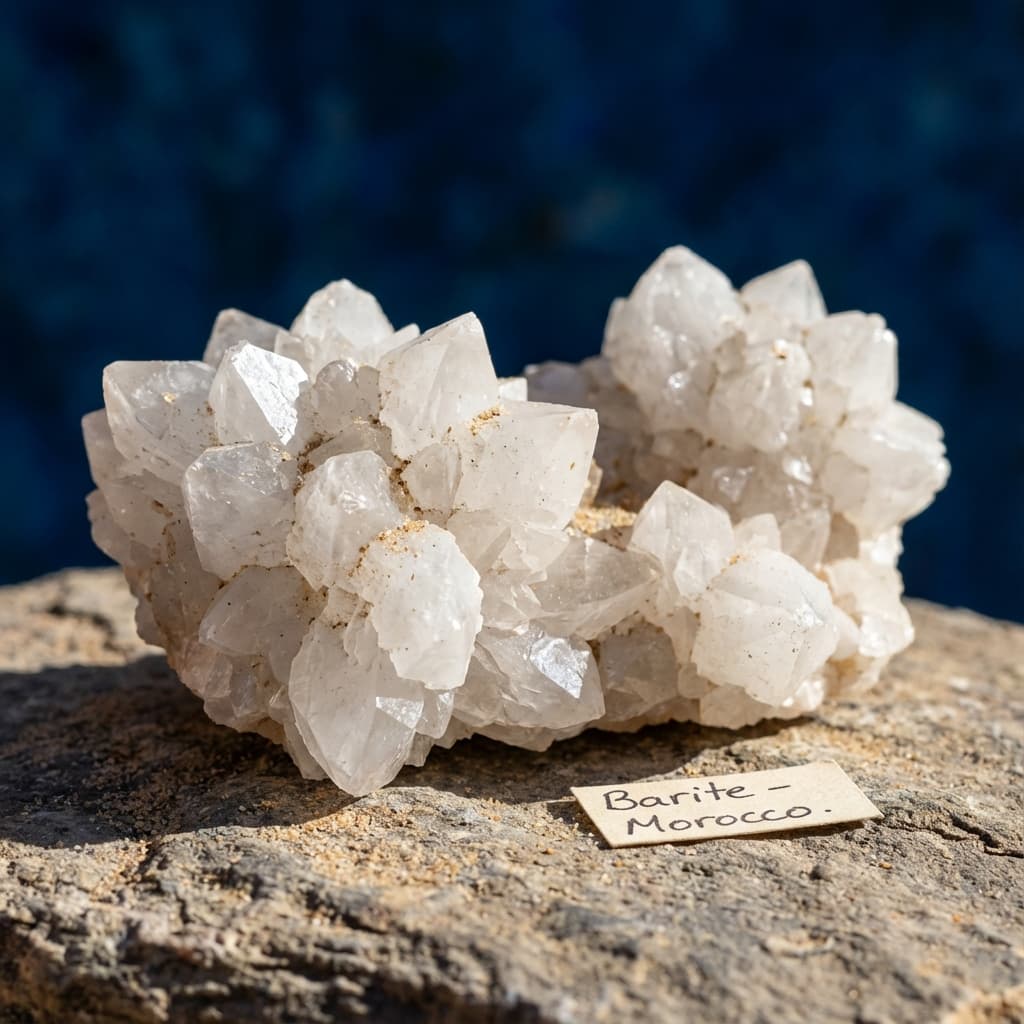
2. Barite (Barium Sulfate): The Safer Alternative
Barite is a non-toxic, high-density mineral increasingly used as a lead alternative or supplement.
Advantages of barite:
- High density (up to 4.5 g/cm³)
- Chemically inert and non-toxic
- Ideal for concrete shielding
- Lower environmental risk than lead
Typical uses:
- Radiation-shielding concrete
- Hospital walls and floors
- Nuclear facilities
Reference:
3. Tungsten: High Performance, High Cost
Tungsten is even denser than lead.
Key features:
- Very high density (19.3 g/cm³)
- Excellent radiation absorption
- High melting point
Limitations:
- Expensive
- Difficult to machine
Used mainly in aerospace, defense, and precision medical equipment.
Reference:
4. Concrete with Heavy Aggregates
Standard concrete can be enhanced with barite, magnetite, or hematite to improve radiation shielding.
Benefits:
- Structural + shielding function
- Cost-effective for large facilities
- Long service life
Used widely in reactors, labs, and hospitals.
Radiation Shielding in Medical Applications
Hospitals rely heavily on shielding materials to protect:
- Patients
- Doctors
- Technicians
Lead-lined doors, barite concrete walls, and tungsten shields ensure safe imaging and treatment environments.
Reference:
Industrial and Nuclear Applications
In industrial radiography and nuclear energy:
- Shielding prevents accidental exposure
- Materials must withstand long-term radiation
- Density and durability are critical
Lead containers and barite-based concrete are standard solutions.
Environmental and Safety Considerations
Lead vs Barite
| Material | Radiation Protection | Toxicity | Sustainability |
|---|---|---|---|
| Lead | Excellent | Toxic | Requires strict handling |
| Barite | Very good | Non-toxic | More eco-friendly |
As regulations tighten, industries increasingly favor barite-based shielding systems.
Morocco’s Role in Radiation Shielding Materials
Morocco is a recognized supplier of:
- Barite (drilling and industrial grade)
- Lead concentrates
Its minerals are used in:
- Construction-grade radiation shielding
- Industrial safety applications
- Export markets in Europe and Africa
Reference:
Quality Control and Testing
Radiation shielding materials must meet strict standards:
- Density verification
- Chemical purity tests
- Mechanical strength testing
- Radiation attenuation measurements
Poor-quality materials can lead to serious safety failures.
Future Trends in Radiation Shielding
The future is moving toward:
- Lead-free shielding solutions
- Composite materials (barite + polymers)
- Lightweight high-density alloys
- Sustainable and recyclable shielding materials
Innovation is driven by safety, regulation, and environmental responsibility.
Conclusion
Radiation shielding materials are a silent but critical line of defense in modern life. From hospitals and laboratories to nuclear and industrial facilities, density is the key to safety. Materials like lead, barite, tungsten, and heavy concrete play essential roles in absorbing harmful radiation and protecting human health. As industries move toward safer and more sustainable solutions, minerals such as barite—especially from reliable suppliers like Morocco—are becoming increasingly important. In radiation protection, what you don’t see can hurt you, and the right shielding makes all the difference.
The3Rocks ensures that the materials you build with meet these critical safety standards.
FAQs
1. Why is lead used for radiation shielding?
Lead’s high density allows it to effectively absorb gamma rays and X-rays, making it ideal for medical and industrial shielding.
2. Is barite a safe alternative to lead?
Yes. Barite is non-toxic, chemically stable, and widely used in radiation-shielding concrete for hospitals and nuclear facilities.
3. What industries use radiation shielding materials?
Medical imaging, nuclear energy, industrial radiography, aerospace, defense, and research laboratories.
4. Can concrete block radiation?
Yes, especially when mixed with heavy minerals like barite or magnetite to increase density.
5. Does Morocco produce radiation shielding minerals?
Yes. Morocco produces barite and lead materials used globally in radiation shielding and industrial safety applications.
About the Minerals Discussed in This Article
The minerals and materials covered in our articles reflect the actual products we source, test, and export from Morocco. The 3 Rocks maintains direct supply relationships with mining operations across Morocco's key mineral-producing regions — including the Anti-Atlas, Middle Atlas, and High Atlas ranges. Every product we offer is verified for chemical composition through independent laboratory analysis and accompanied by a certificate of analysis.
Morocco holds some of the world's most significant mineral reserves, including over 70 percent of global phosphate reserves, substantial base metal deposits across the Atlas Mountain ranges, and growing production of strategic minerals essential for the energy transition. The country's mining sector benefits from political stability, modern port infrastructure at Casablanca, Tangier Med, and Jorf Lasfar, free trade agreements with both the European Union and the United States, and a regulatory framework designed to attract responsible international investment.
Our team comprises geologists with field experience across Moroccan mining districts, mineral processing engineers who oversee beneficiation and quality control, and logistics professionals who manage the full export chain from mine site to destination port. We apply consistent testing protocols to every shipment, including X-ray fluorescence screening for elemental composition and inductively coupled plasma analysis for trace element verification. Each shipment receives a certificate of analysis before loading, and samples are retained for reference.
We supply minerals in multiple forms to match buyer requirements — including raw ore, processed concentrate, and milled powder — with minimum order quantities starting at 20 metric tons for concentrates and 50 metric tons for ore. For current pricing, specifications, stock availability, and delivery timelines to your destination port, contact our team with your target quantities and quality requirements.
Every article published in our library is reviewed by at least one member of our technical staff with direct experience in the mineral or application being discussed. Our editorial process includes verification of mineral grades against published USGS commodity summaries, cross-referencing of Moroccan deposit locations with data from the Ministry of Energy Transition and Sustainable Development, and confirmation of all technical claims against peer-reviewed sources or established industry standards such as ASTM, ISO, and EN. We update each article annually to reflect changes in market conditions, regulatory developments, and new geological data from Moroccan mining districts.
Readers who wish to verify any claim made in this article are invited to contact our technical team directly. We maintain a reference file for every article that lists the primary sources used during the editorial review, and we can provide copies of the relevant laboratory certificates, USGS excerpts, or ministry publications on request. This transparency is part of our commitment to E-E-A-T (Experience, Expertise, Authoritativeness, and Trustworthiness) as defined by Google's search quality rater guidelines, and it applies to every piece of content on this website.
How to Request a Quote or Sample
Sourcing Moroccan raw materials through The 3 Rocks follows a straightforward process designed to give buyers the information they need to make informed procurement decisions. To request a quotation or a laboratory sample, send an email to info@the-3rocks.com with your target mineral, the required grade or purity range, the quantity in metric tons, the preferred product form (ore, concentrate, or powder), the destination port or country, and your desired incoterm. Our commercial team responds to all inquiries within one business day with an indicative price, current stock availability, and a preliminary delivery schedule based on the shipping route from Casablanca, Tangier Med, or Jorf Lasfort to your nominated destination.
For first-time buyers, we recommend starting with a trial order of 20 to 50 metric tons to evaluate material quality, documentation accuracy, and logistics reliability before entering a long-term supply contract. During the trial phase, we provide free samples of up to five kilograms for laboratory testing at the buyer's facility, with the buyer covering the courier cost. Sample shipments are dispatched within three business days of the request by international courier and include a preliminary certificate of analysis from our on-site laboratory. Buyers who require a larger bulk sample of 50 kilograms or more for pilot-scale processing trials can arrange those from our depot within two weeks of the request.
All prices quoted by The 3 Rocks are expressed in US dollars per metric ton and are valid for the period stated in the quotation. Pricing is based on the mineral grade, the quantity, the packaging format, the incoterm, and the destination port. For long-term contracts exceeding twelve months, we offer formula-based pricing tied to the relevant LME reference price or to a Metal Bulletin assessment, with a fixed margin for beneficiation, logistics, and administration that is reviewed annually. Payment terms are negotiable on a per-contract basis, with irrevocable letters of credit being the most common arrangement for new buyer relationships.
Morocco's Strategic Position in Global Mineral Supply
Morocco has emerged as one of the most reliable and competitive origins for industrial minerals and metallic ores serving the European, American, African, and Middle Eastern markets. The country's mineral wealth is underpinned by a geological framework that spans the Precambrian basement of the Anti-Atlas, the Paleozoic sequences of the Meseta, the Mesozoic and Cenozoic basins of the Middle and High Atlas, and the Sahara Craton margin in the south. This diversity means that Morocco is one of the few countries where a buyer can source lead, zinc, copper, barite, iron ore, cobalt, and antimony from within a single national territory, often within a few hundred kilometres of each other.
Morocco's competitive advantage as a mineral supplier is reinforced by its trade infrastructure. The country has deep-water ports at Casablanca, Tangier Med, Jorf Lasfar, and Safi that handle bulk, break-bulk, and containerised mineral cargoes. Tangier Med is the largest container transshipment hub in Africa and the Mediterranean, with over 180 direct liner connections to ports in Europe, Asia, the Americas, and the Middle East. Morocco has a comprehensive network of paved roads connecting all major mining districts to the port terminals, and the national railway operator ONCF operates dedicated mineral trains from the phosphate and iron ore mining regions to the port loaders. These infrastructure assets translate into shipping lead times of ten to eighteen days from Casablanca to Rotterdam, twelve to twenty-two days to Shanghai, and eight to fourteen days to Houston, depending on the liner service and the vessel schedule.
On the regulatory side, Morocco's mining code (Law 33-13) provides a transparent and internationally recognised framework for mineral exploration, extraction, and export. Mining permits are issued by the Ministry of Energy Transition and Sustainable Development, and the export of mineral products is governed by the customs provisions of the General Tax Code and supervised by the Moroccan Office of Hydrocarbons and Mines (ONHYM). Morocco has free trade agreements with the European Union (Association Agreement since 2000), the United States (Free Trade Agreement since 2006), Turkey, Egypt, Jordan, Tunisia, the United Arab Emirates, and the countries of the Economic Community of West African States (ECOWAS), which means that mineral imports from Morocco into these markets benefit from reduced or zero customs duties. These trade agreements, combined with Morocco's political stability, its proximity to European markets (fourteen kilometres from Spain at the Strait of Gibraltar), and its growing reputation for responsible mining practices, make it a low-risk and cost-effective sourcing destination for international mineral buyers.
The 3 Rocks complements these national advantages with its own quality assurance systems, documented chain of custody, and dedicated account management for every buyer. Whether you are sourcing a single 20-ton container of Moroccan barite for a drilling fluids application or contracting 40,000 tons of iron ore per year for a Mediterranean steel mill, our team provides the technical documentation, logistics coordination, and commercial transparency that make Moroccan minerals a practical and dependable choice for your supply chain.
About The 3 Rocks Editorial Team
Mining & Geological Experts
The 3 Rocks Editorial Team consists of geologists, mining logistics experts, and sustainability officers dedicated to providing transparent, verified, and E-E-A-T compliant insights on Moroccan raw materials.